
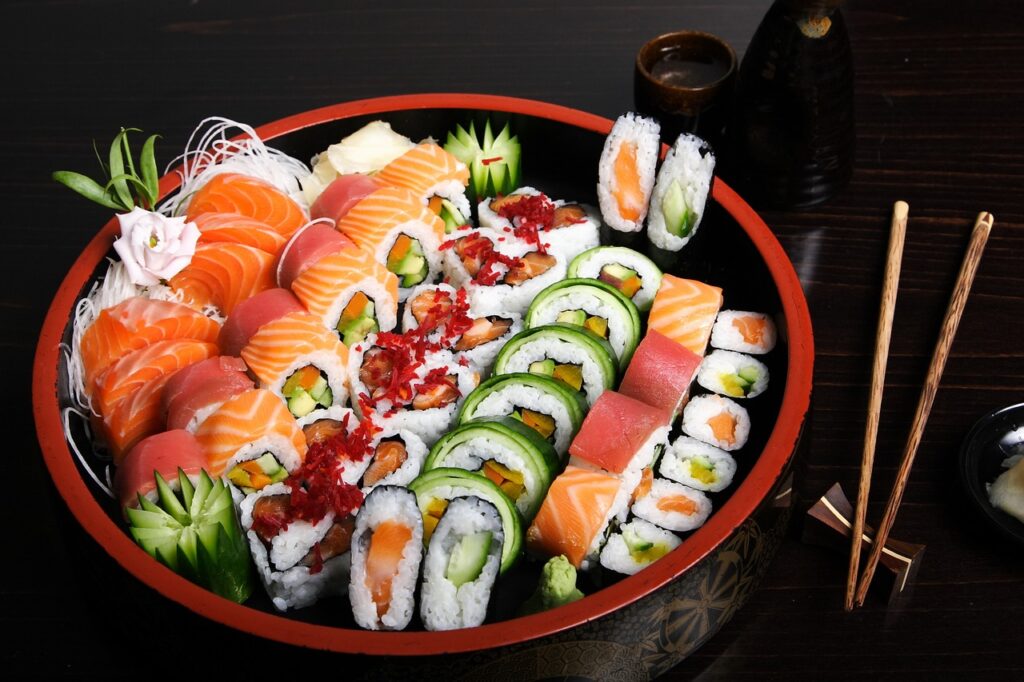
1. Traditional Edo-style Sushi Rolls
These sushi rolls are hosomaki which consists of one main ingredient and is usually wrapped with nori on the outside. How many of these do you know or tried before?
- tuna roll (tekka maki) – today’s recipe
- cucumber roll (kappa maki) – today’s recipe
- fermented soybean roll (natto maki) – today’s recipe
- dried gourd roll (kanpyo maki)
- pickled daikon roll (shiko maki)
- pickled plum & cucumber roll (umekyu)
- eel/sea eel & cucumber roll (unakyu or anakyu maki)
- tuna & scallion roll (negitoro maki)
- yellowtail & scallion roll (negihama
1. Sushi Rice
One of the important ingredients to make sushi rolls is to have the right sushi rice. To cook the rice, you’ll need uncooked Japanese short-grain white rice, water, and kombu (dried kelp). To season the cooked rice, you’ll need rice vinegar, sugar, and Diamond Crystal kosher salt as described in my Sushi Rice recipe.
2. The Fillings
Today, we’ll make single-filling rolls with tuna, cucumber, or natto. Tuna and cucumber rolls are the most popular hosomaki and you have probably seen or eaten these at Japanese restaurants.
Traditionally, the fillings for hosomaki are either (raw or cooked) seafood or vegetables. However, if you don’t eat raw fish, you can use other ingredients you like. Experiment with what food works for your preference. Here are some ideas:
- Vegetable and fruit filling ideas: The traditional Japanese fillings include julienned cucumber, pickled daikon, dried gourd, bell pepper, or radish. You can use non-traditional Japanese ingredients such as avocado or mango, if you’d like.
- Sushi with raw fish: Sushi-grade salmon or tuna. See below for where to buy sushi-grade seafood.
- Sushi without raw fish: Imitation crab sticks, cooked crab meat, canned tuna with spicy mayo, smoked salmon, smoked mackerel, or natto (fermented soybean).
3. Nori Sheet (Roasted Seaweed)
There are many types of “seaweed” used in Japanese cooking, and for making sushi rolls, we need dried laver seaweed called nori (海苔). They are roasted and look like sheets of paper. We use a half sheet of nori for this recipe but depending on the type of roll, we use half, 3/4, or a whole sheet of nori.
Please remember that nori gets stale easily. Therefore, once you open the package, store in an airtight container or a